1. Introduction
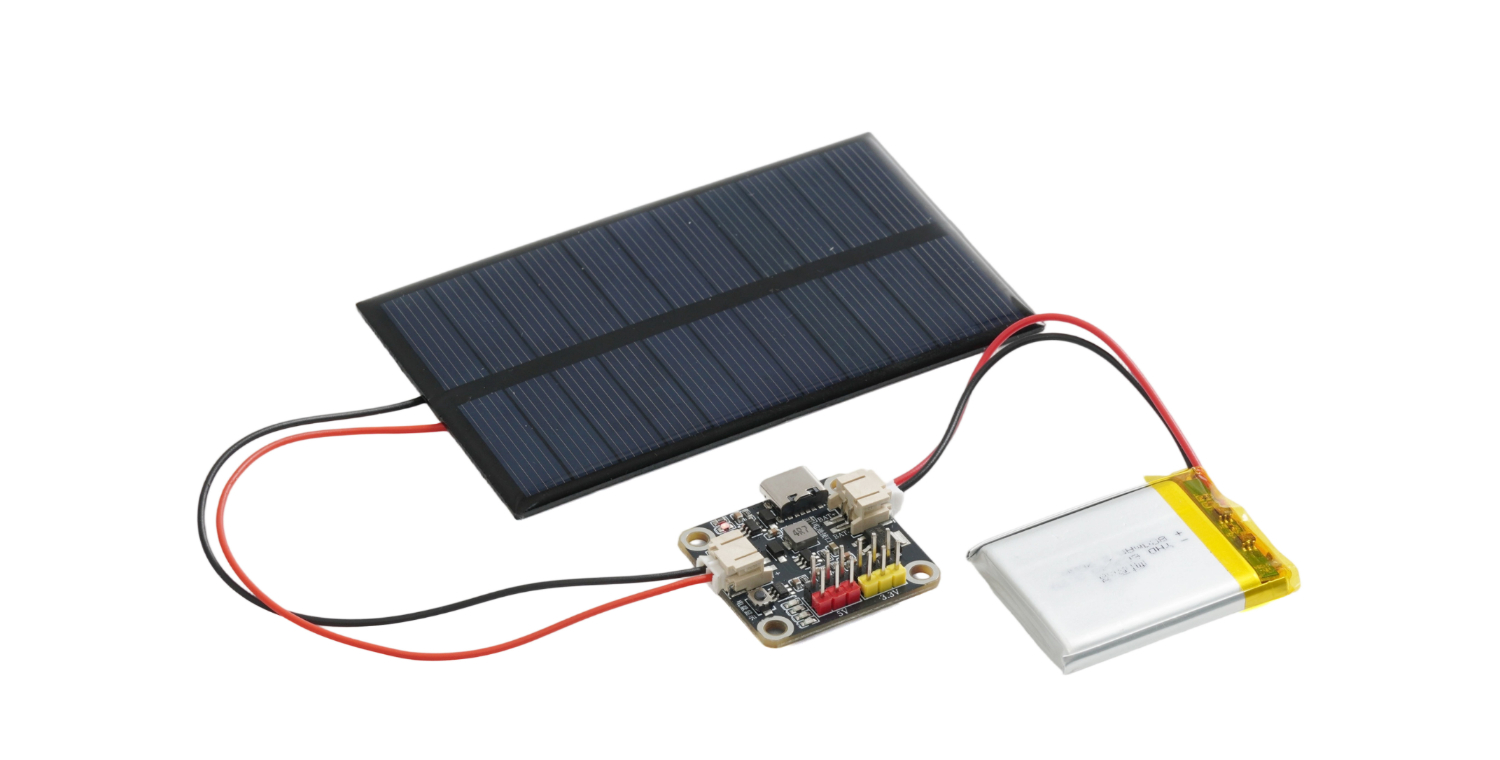
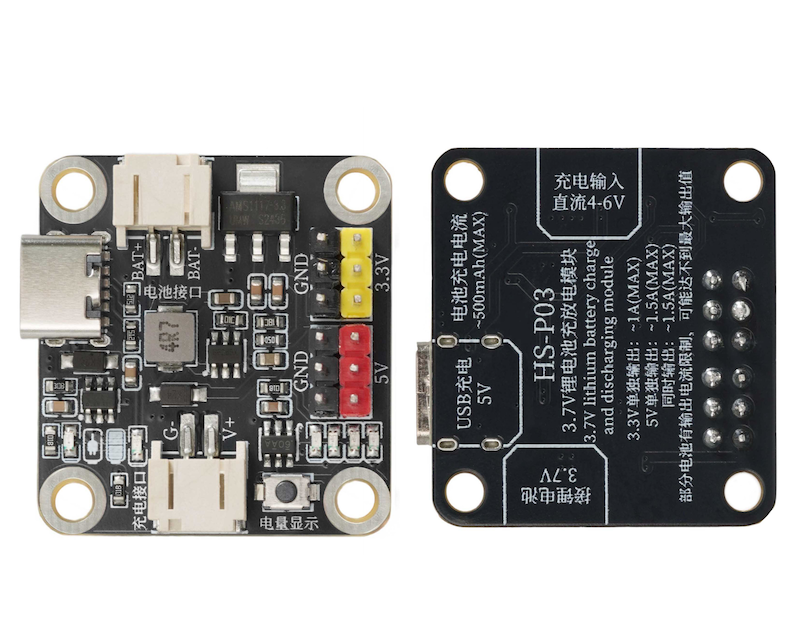
The module can display the battery power by pressing the switch, and the red charging indicator light will turn on when charging, providing a direct display of the charging status.When the battery is fully charged, the full charge indicator light turns on to indicate that charging is complete.Supports multiple charging input methods, capable of accepting DC 4-6V input.Equipped with a Type-C 5V charging port, and also has a USB charging 5V interface.It can provide various voltage outputs, including 3.3V and 5V output interfaces, which can meet the needs of different electrical equipment.3.3V maximum output current is about 1A, 5V maximum output current is about 1.5A, and when outputting simultaneously, the maximum current is about 1.5A. However, due to the inherent limitations of some batteries, the actual output may not reach the maximum value.
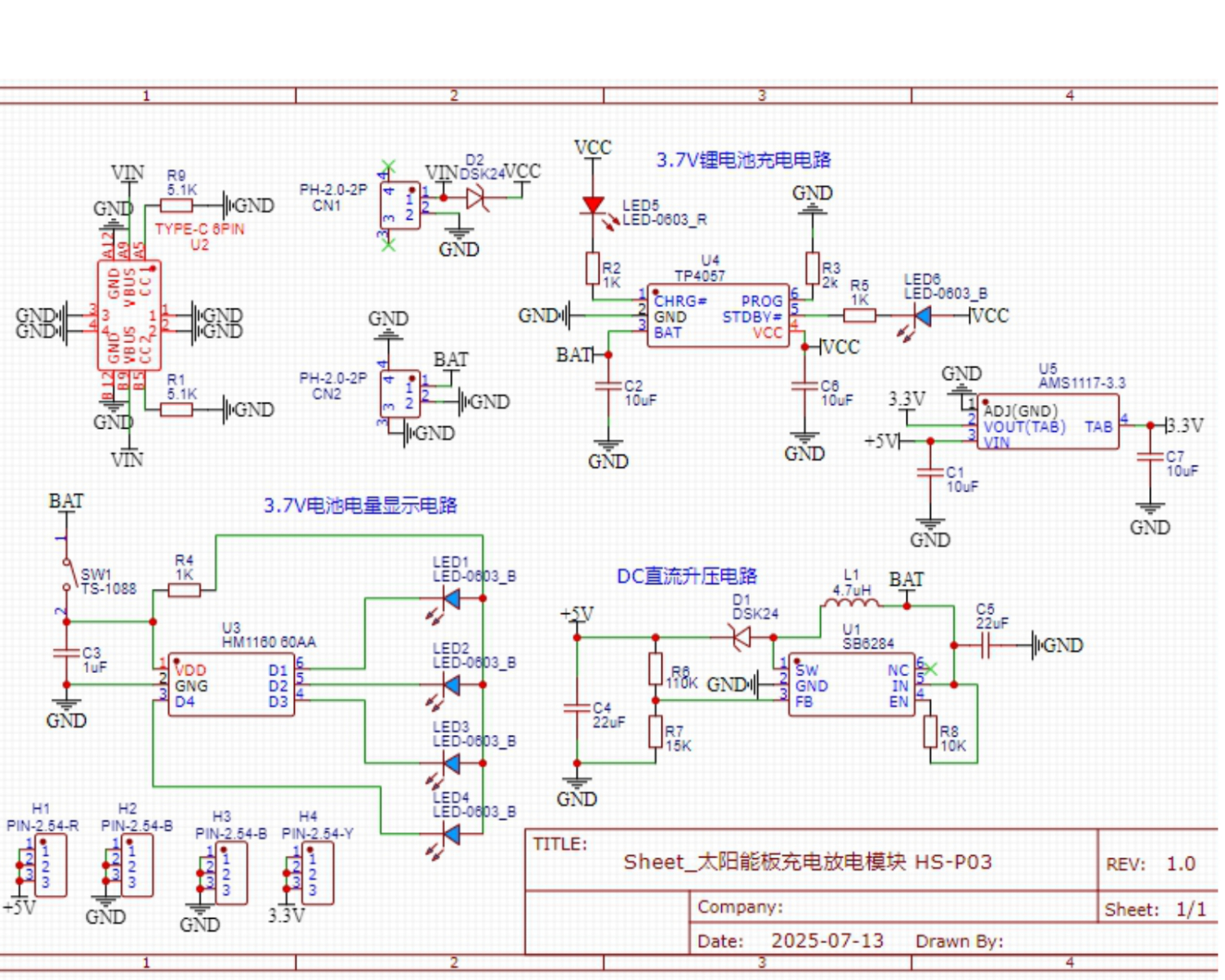
2. Schematic
Module Parameters
Pin Name | description |
|---|---|
G | GND (negative power output) |
5V | VCC (Power output positive terminal) |
3.3V | VCC (Power output positive terminal) |
Power Supply Voltage: 3.3V / 5V
Connection method: PH2.0 terminal wire
Installation method: Screw fixed
Operating temperature: 40°~80℃
Charging: Red indicator light is on
Charging complete: Blue indicator light is on
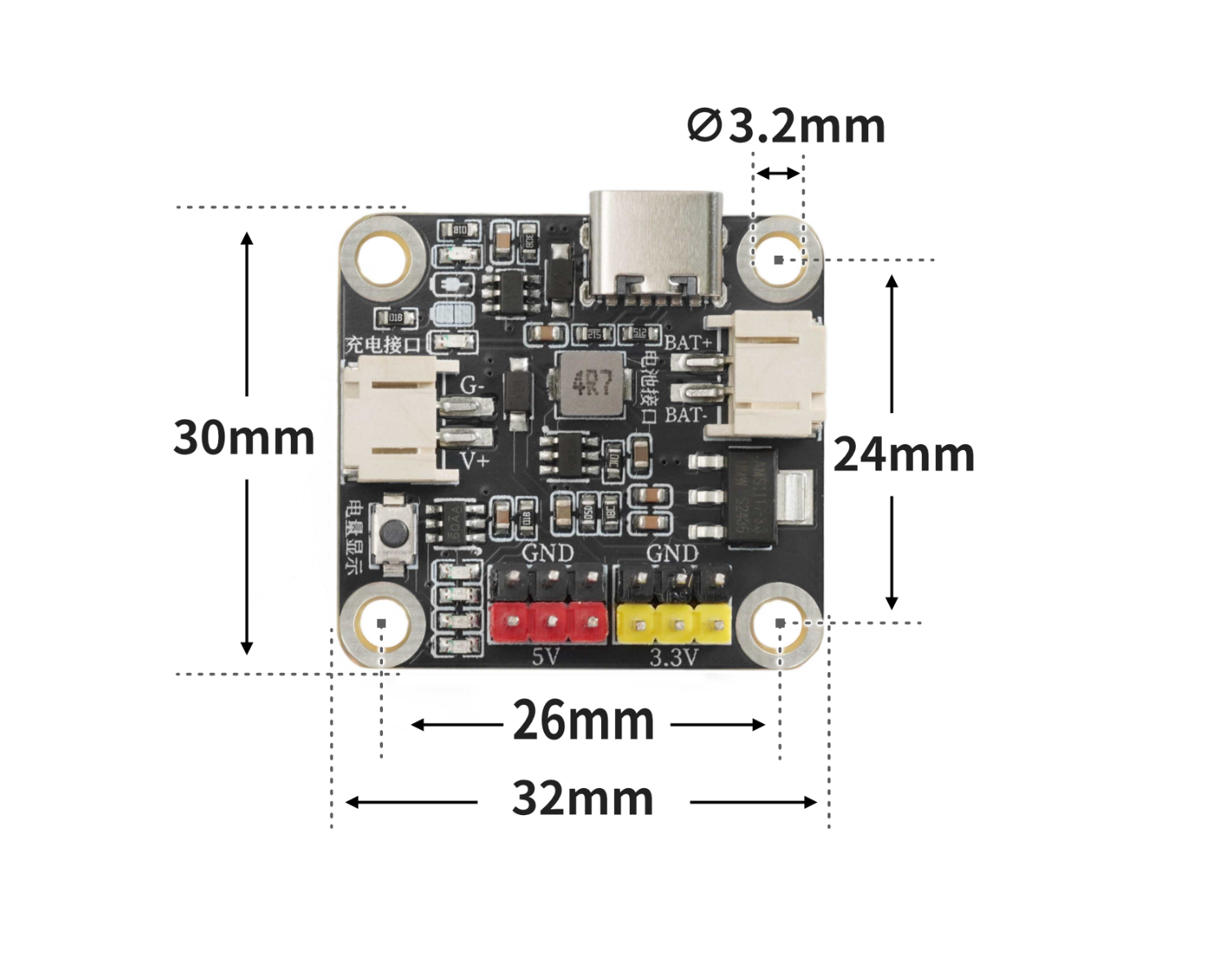
4, Circuit Board Size
5、Technical Parameters
Name: 3.7V Lithium Battery Charging and Discharging Module
Model: HS-P03
Interface Type: USB Interface,
Module Size: 30mm*32mm
Hole Spacing: 24mm, 26mm Hole Diameter: 3.2mm
Installation method: screw/brick fixed
Operating temperature: 40°~80℃
Charging: Red indicator light is on
Charging complete: Blue indicator light is on
6, Test Environment Setup
Test Environment Setup
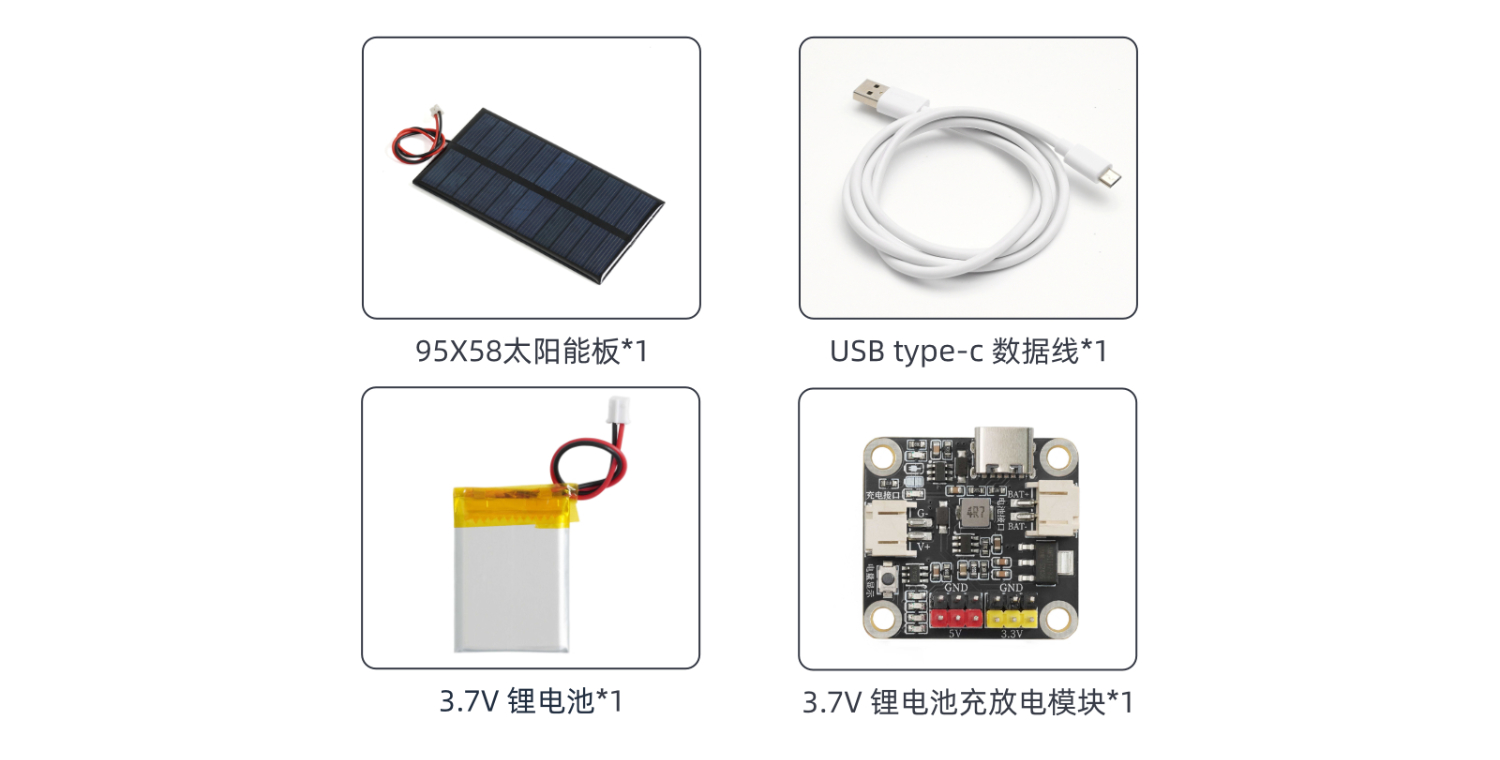
Prepare Components:
Magnetic Suction Electromagnet Module (HS-P03) *1
3.3v Battery Pack
Solar Photovoltaic Panel
Accessories:
7, Video tutorial
Video Tutorial:Click to view
8, Test conclusion
Test Conclusion:
With the change of light intensity, the charging time varies. For example, under sufficient direct sunlight, it may take several hours to charge a lithium battery from low to full capacity;If the light intensity is insufficient, such as on cloudy days or in low-light indoor environments, the charging time will be significantly extended, and it may not charge effectively.